China's State Council General Office has set out how officials should assess and respond to the employment effects of artificial intelligence. The document was signed on 16 October and published on 23 October. It calls for risk assessments, worker training and support for job changes, while leaving the scale of displacement and results of those measures unquantified.[1]
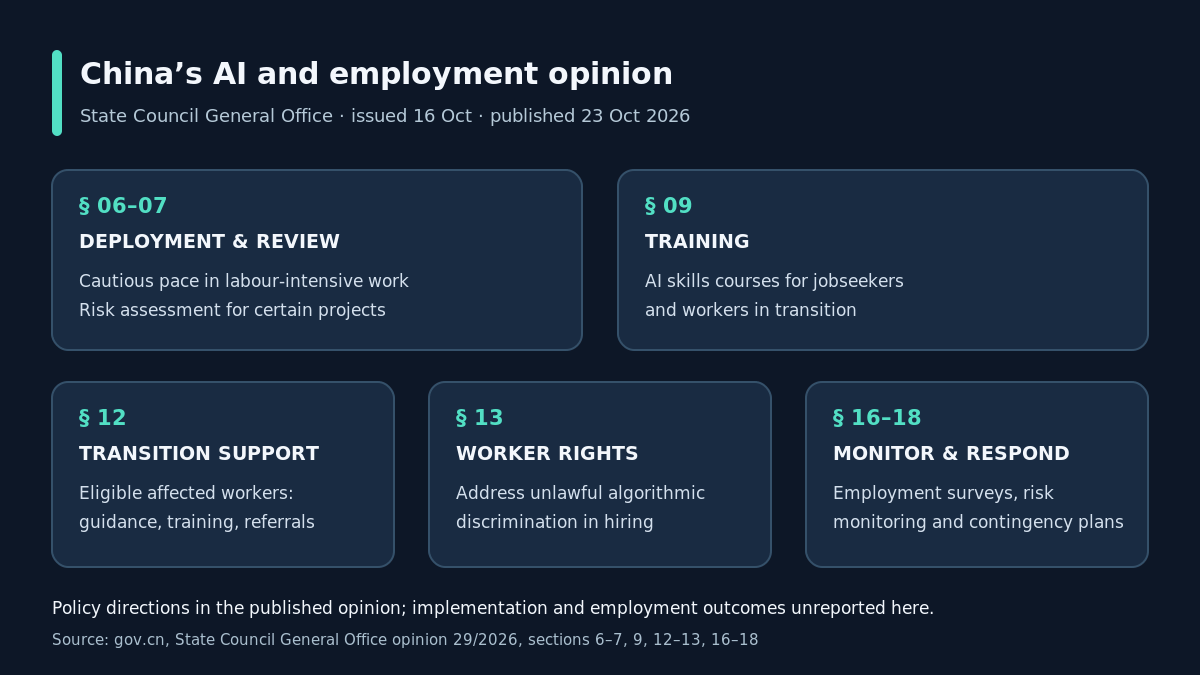
The opinion asks that AI deployment in labour-intensive industries proceed cautiously. Firms are encouraged to explore an unemployment buffer period and notify affected workers ahead of large-scale adoption, offering help with changing roles.[1]
For AI application projects in market-access areas that could substantially disrupt employment, the document calls for an employment-risk assessment during project review. Assessments in other areas are to reflect local circumstances. The assessment requirement varies by project type.[1]
The training proposals include AI courses for graduates, migrant workers and unemployed people. Eligible workers affected by displacement are to receive career guidance, training, job recommendations or entrepreneurship support under existing rules. Relevant insured unemployed workers are to receive benefits under applicable provisions.[1]
In human-resources management, the opinion calls for action against unlawful algorithmic discrimination, fraudulent recruitment and violations of privacy or rest rights. It also proposes cross-department data sharing, regional and industry monitoring models, surveys tracking job creation and replacement, and contingency plans for large-scale unemployment risks.[1]
Reuters covered the policy's publication on 23 October; its account addresses the same government document.[2] The next test is whether officials publish assessment criteria, survey findings and counts of workers receiving support. The opinion sets no quantified target or reported result for those measures.[1]

